The Power of Hydration: A Complete Water Intake Guide for Piles Patients

Piles Symptoms: Early Signs, Causes, and Complete Guide
May 5, 2026
What Is a Pilonidal Sinus?
June 3, 2026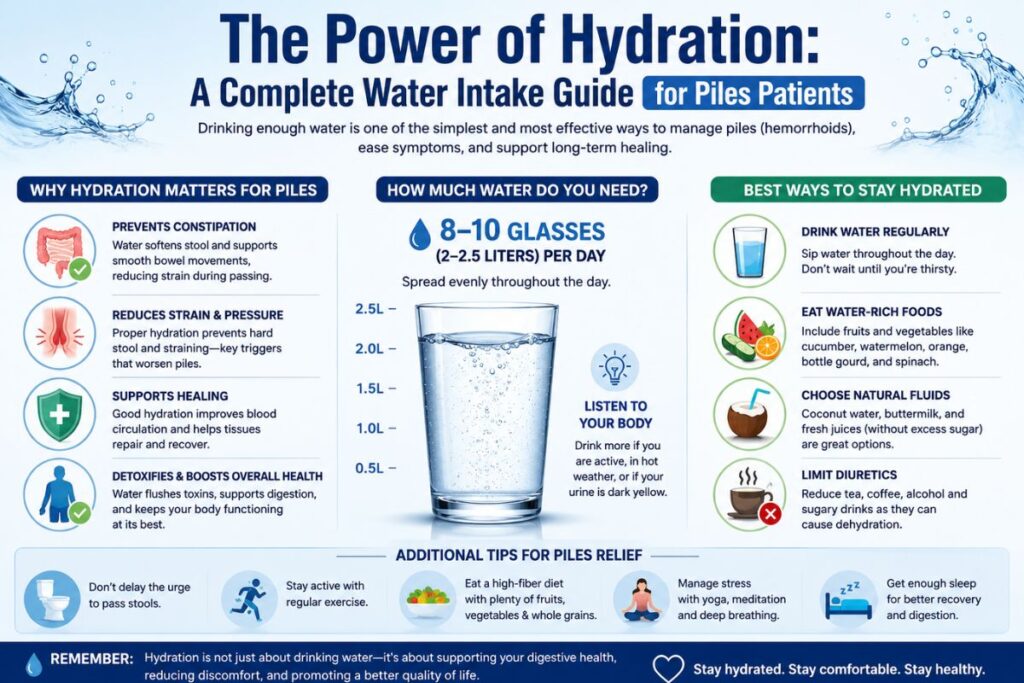
Piles, medically known as hemorrhoids, affect millions of people worldwide and can cause significant discomfort, pain, and embarrassment. While there are many treatment options available, one of the simplest and most overlooked remedies lies in something we all have access to — water. Proper hydration plays a foundational role in managing and preventing piles. If you are suffering from this condition, understanding how water intake affects your digestive health could be the turning point in your recovery journey. Many patients seeking Piles (Hemorrhoids) Treatment in Faridabad are often advised to increase their daily water intake as part of a comprehensive treatment and prevention plan.
In this blog, we will explore the critical relationship between water consumption and piles, how hydration works hand in hand with dietary fiber, and practical strategies to promote constipation prevention, stool softening, and long-term bowel regularity.
Why Water Matters for Piles Patients
Piles develop when the veins around the rectum and anus become swollen and inflamed. This is most commonly caused by excessive straining during bowel movements, which is directly linked to constipation and hard stools. The good news is that increasing your water intake is one of the most natural and effective ways to address this root cause.
When your body is well-hydrated, your digestive system functions smoothly. Water helps break down food, absorb nutrients, and move waste through the intestines efficiently. Without adequate hydration, the colon absorbs too much water from the waste material, making stools dry, hard, and difficult to pass.
For piles patients, the consequences of dehydration are especially severe. Hard stools force you to strain, putting immense pressure on the anal veins and worsening the hemorrhoids. This is why hydration is not just a general wellness tip — it is a medical necessity for anyone dealing with piles.
How Much Water Should a Piles Patient Drink?
The general recommendation for healthy adults is 8 glasses (approximately 2 liters) of water per day. However, for piles patients, doctors often recommend slightly more — around 2.5 to 3 liters daily — especially if you live in a hot climate, exercise regularly, or consume a high-fiber diet.
Here is a simple daily hydration schedule you can follow:
- Morning: Start your day with 1–2 glasses of warm water on an empty stomach. This activates the digestive system and prepares the bowel for movement.
- Mid-Morning: Drink 1 glass of water between breakfast and lunch.
- Afternoon: Have 2 glasses of water with or after lunch.
- Evening: Drink 1–2 glasses of water in the late afternoon to maintain bowel regularity.
- Night: Sip 1 glass of water before bed — but avoid overdrinking to prevent sleep disruption.
Spacing your water intake throughout the day is far more effective than drinking large amounts all at once. Consistency is the key to achieving lasting constipation prevention.
The Role of Dietary Fiber and Hydration Together
You cannot talk about water intake for piles without mentioning dietary fiber. These two elements work as a team in your digestive system. Dietary fiber adds bulk to the stool, while water softens it — together, they make bowel movements smooth, painless, and regular.
There are two types of dietary fiber:
1. Soluble Fiber This type dissolves in water to form a gel-like substance in the intestines. It slows digestion, helps regulate blood sugar, and most importantly, keeps stools soft and moist. Foods rich in soluble fiber include oats, apples, bananas, carrots, and flaxseeds.
2. Insoluble Fiber This type does not dissolve in water but adds bulk to the stool, speeding up its movement through the digestive tract. It is found in whole grains, nuts, beans, and most vegetables.
For piles patients, a combination of both types of dietary fiber is ideal. The recommended daily intake is 25–38 grams of fiber per day. However, it is crucial to increase fiber intake gradually and always pair it with increased water consumption.
Important: If you increase dietary fiber without increasing water intake, it can actually worsen constipation and bloating. Always drink extra water when you add more fiber to your diet.
Constipation Prevention: The Heart of Piles Management
At the core of piles management is constipation prevention. Constipation is the single biggest trigger for hemorrhoid flare-ups, and chronic constipation can turn a mild case of piles into a severe, painful condition requiring surgery.
Hydration is the first line of defense in constipation prevention. Here is how it works:
- Water lubricates the intestinal walls, making it easier for stool to pass through.
- It dissolves soluble fiber and activates its gel-forming properties.
- It activates the natural peristaltic contractions of the intestines — the wave-like muscle movements that push stool forward.
- It prevents the colon from extracting too much moisture from the stool, keeping it soft.
Beyond drinking plain water, certain fluids also support constipation prevention:
- Warm lemon water in the morning stimulates digestive enzymes.
- Coconut water provides natural electrolytes and hydrates the colon.
- Buttermilk contains probiotics that improve gut health.
- Herbal teas like ginger or peppermint tea can soothe the digestive tract.
Fluids to avoid include alcohol, caffeinated beverages in excess, and sugary sodas — all of which dehydrate the body and contribute to constipation.
Stool Softening: How Water Changes Everything
One of the most immediate and noticeable benefits of proper hydration for piles patients is stool softening. When you drink enough water, stools become softer, bulkier, and easier to pass without any straining.
Stool softening directly reduces the pressure on the hemorrhoidal veins during bowel movements. This means less pain, less bleeding, and faster healing of existing piles. For patients who experience painful bowel movements, improving hydration can bring relief within just a few days.
Here are additional tips to enhance stool softening naturally:
- Add a teaspoon of psyllium husk (Isabgol) to a glass of water once daily. Psyllium husk is one of the most powerful natural agents for stool softening and is widely recommended by gastroenterologists.
- Consume prunes or prune juice, which contain sorbitol — a natural laxative compound that draws water into the intestines.
- Eat papaya and kiwi regularly — both fruits are rich in digestive enzymes and fiber that promote stool softening.
- Avoid refined foods like white bread, white rice, and processed snacks that harden stools and slow digestion.
When stools are consistently soft, the cycle of straining and worsening piles is broken. Stool softening through hydration and diet is a safe, natural, and sustainable approach compared to chemical laxatives, which can become habit-forming.
Achieving Long-Term Bowel Regularity
The ultimate goal for every piles patient is consistent, effortless bowel regularity — going to the toilet once or twice a day without pain or straining. Bowel regularity means your digestive system is working in harmony, and it is the clearest sign that your piles are under control.
Hydration is the cornerstone of bowel regularity. Without sufficient water, even the best diet cannot guarantee regular bowel movements. Here are strategies to maintain bowel regularity over the long term:
1. Never Ignore the Urge When you feel the urge to go, respond to it immediately. Suppressing bowel urges causes stools to harden in the rectum, making them harder to pass later.
2. Establish a Routine Try to visit the toilet at the same time every day — ideally in the morning after drinking warm water. Consistency trains your bowel and promotes natural bowel regularity.
3. Stay Active Physical activity stimulates intestinal movement. Even a 20–30 minute walk each day can significantly improve bowel regularity and reduce the risk of constipation.
4. Manage Stress Stress is a well-known disruptor of digestive function. Practices like yoga, meditation, and deep breathing can help maintain bowel regularity by calming the nervous system that controls gut motility.
5. Track Your Water Intake Use a water bottle with measurements or a hydration tracking app to ensure you are meeting your daily hydration goals consistently.
Foods and Drinks to Include and Avoid
Include:
- Water (plain, warm, or infused with lemon/cucumber)
- High-fiber fruits: papaya, banana, apple, pear
- Vegetables: spinach, broccoli, sweet potato
- Whole grains: oats, brown rice, whole wheat bread
- Dietary fiber supplements: psyllium husk, flaxseeds
Avoid:
- Alcohol and caffeinated drinks in excess
- Spicy and oily foods
- Refined carbohydrates and processed foods
- Red meat in large quantities
- Dairy products if they cause constipation
Final Thoughts
Managing piles does not always require expensive medications or invasive procedures. In many cases, the path to relief begins with a simple glass of water. By prioritizing hydration, pairing it with adequate dietary fiber, and following healthy lifestyle habits, piles patients can achieve effective constipation prevention, natural stool softening, and sustainable bowel regularity. Patients exploring advanced options like Pilonidal Sinus Treatment in Faridabad are also often encouraged to maintain proper hydration and digestive health, as healthy bowel habits can support overall recovery and reduce strain during daily activities.
Start small — carry a water bottle, add more fruits and vegetables to your meals, and build a consistent daily routine. Your body — and your digestive system — will thank you for it. Remember, when it comes to piles, water is not just a beverage. It is your medicine.