Anal Fistula: Causes, Symptoms, and Treatment Options Explained

Can Sitting for Long Hours Increase the Risk of Piles?
July 9, 2026
Kshar Sutra Treatment for Piles: Benefits, Procedure & Recovery
July 18, 2026
Living with persistent pain, drainage, or discomfort near the anus can be distressing and confusing. One of the more common yet under-discussed conditions causing these symptoms is an anal fistula, medically known as fistula-in-ano. Despite being a treatable condition, many people delay seeking help due to embarrassment or lack of awareness.
If you are experiencing these symptoms, seeking timely Fistula Treatment in Faridabad can help prevent complications and improve recovery outcomes. Early diagnosis by a qualified specialist allows for appropriate treatment planning, reducing the risk of recurrent infections and long-term discomfort.
This article breaks down everything you need to know — from causes to modern treatment options — so you can make informed decisions about your health.
What Is an Anal Fistula?
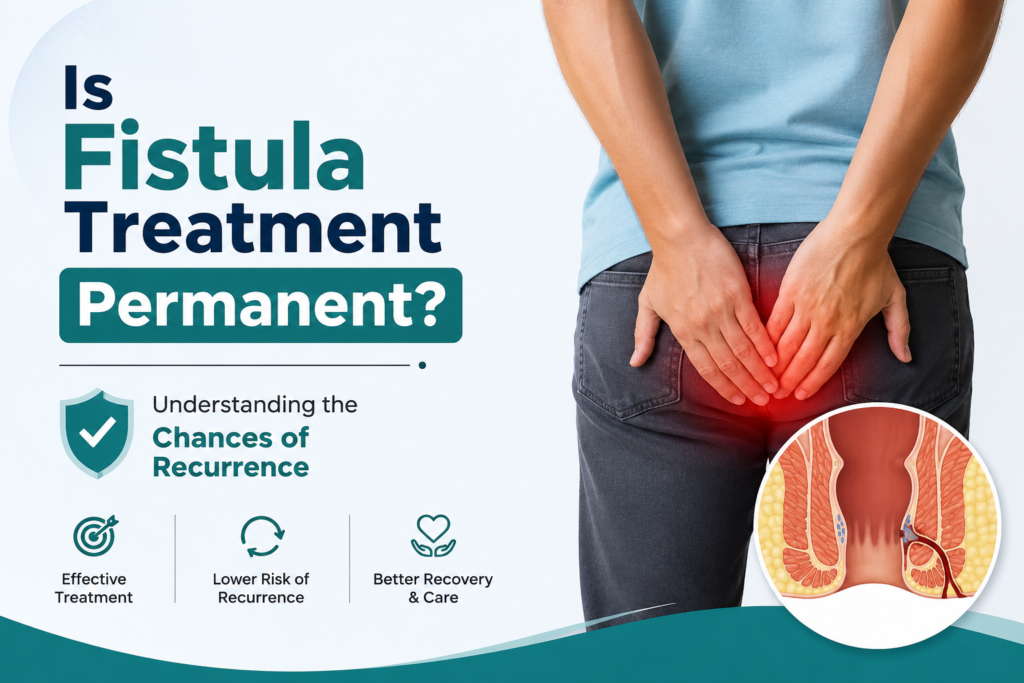
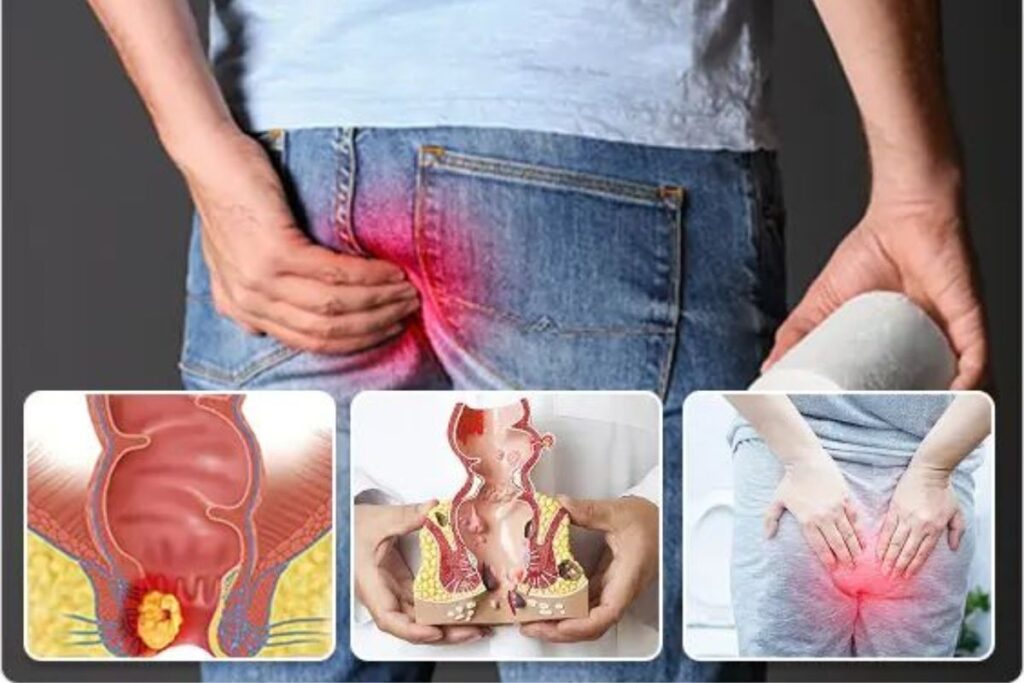
An anal fistula, or fistula-in-ano, is an abnormal tunnel that develops between the inner lining of the anal canal and the skin surrounding the anus. Think of it as a small passageway that shouldn’t exist under normal circumstances, formed when infected tissue creates a channel seeking an outlet.
The condition typically has two openings: an internal opening inside the anal canal and an external opening on the skin near the anus. Through this tract, fluid — often pus mixed with blood — can drain intermittently or continuously, causing irritation, discomfort, and hygiene challenges.
Understanding fistula-in-ano as a distinct medical entity is important because it’s not just a symptom — it’s a structural change in the tissue that, in almost all cases, requires surgical correction. Unlike many minor anorectal issues that resolve with topical treatment or dietary changes, a fistula tract rarely closes on its own.
What Causes an Anal Fistula?
The Role of Anorectal Abscess
The vast majority of anal fistulas originate from an anorectal abscess — a painful collection of pus that forms when one of the small glands inside the anus becomes infected. These glands, located just inside the anal canal, can become blocked with stool, bacteria, or debris, leading to infection and swelling.
When an anorectal abscess is drained — either spontaneously by rupturing through the skin or surgically by a physician — the tunnel through which the pus escaped can remain open. Instead of healing completely, this tract persists, forming a chronic fistula. Studies suggest that roughly 30–50% of patients who experience an anorectal abscess will go on to develop a fistula, making the connection between these two conditions critical for both patients and doctors to understand.
Other Contributing Factors
While an anorectal abscess is the most common precursor, other conditions can also lead to fistula formation:
- Crohn’s disease: This inflammatory bowel disease is strongly associated with fistula development, sometimes even without a preceding abscess.
- Tuberculosis: In regions where TB is prevalent, it can be an underlying cause of anorectal fistulas.
- Trauma or surgical complications: Prior anal surgeries or childbirth-related injuries can occasionally result in fistula formation.
- Radiation therapy: Patients who have undergone pelvic radiation for cancer treatment may develop fistulas as a long-term complication.
- Sexually transmitted infections: Certain infections can contribute to abscess and fistula formation in rare cases.
Recognizing these varied causes helps physicians tailor treatment, since a fistula caused by Crohn’s disease, for example, may require a different management approach than one caused by a simple anorectal abscess.
Recognizing the Symptoms
The symptoms of an anal fistula can range from mildly annoying to significantly painful, and they often fluctuate depending on whether the tract is actively draining or temporarily blocked.
Common Symptoms Include:
- Perianal drainage — This is often the hallmark symptom. Patients notice recurrent or constant leakage of pus, blood-tinged fluid, or a foul-smelling discharge from an opening near the anus.
- Pain and swelling — Discomfort that worsens with sitting, bowel movements, or physical activity.
- Skin irritation — Constant perianal drainage can lead to redness, itching, and skin breakdown around the anus.
- Fever and malaise — If the tract becomes blocked and pus accumulates, patients may develop a recurrent abscess with associated fever, chills, and fatigue.
- Bleeding — Occasional blood in discharge or on toilet paper.
- A visible or palpable opening — Many patients notice a small, tender bump or hole in the skin near the anus.
The pattern of perianal drainage is particularly telling — it often comes and goes in cycles, with periods of reduced symptoms followed by flare-ups. This cyclical nature can lead people to mistakenly believe the condition is resolving, when in reality the underlying tract remains open and active.
When to See a Doctor
If you experience persistent drainage, recurring anal pain, or a lump near the anus that won’t go away, it’s important to consult a colorectal surgeon or gastroenterologist. Early diagnosis prevents complications like recurrent infections, chronic pain, or in rare cases, tissue damage that complicates future surgical repair.
How Is an Anal Fistula Diagnosed?
Diagnosis typically begins with a physical examination, where a doctor looks for external openings, areas of tenderness, and signs of perianal drainage. However, because fistula tracts can be complex and branch in unexpected directions, imaging studies are often necessary for a complete picture.
Diagnostic Tools:
- MRI (Magnetic Resonance Imaging): Considered the gold standard for mapping complex fistula tracts, especially those associated with Crohn’s disease.
- Endoanal ultrasound: Provides detailed images of the sphincter muscles and fistula path, useful for surgical planning.
- Fistula probing: A thin probe may be gently passed through the tract during examination to trace its path.
- Classification systems: Doctors often use the Parks classification to categorize fistula-in-ano based on its relationship to the anal sphincter muscles (intersphincteric, transsphincteric, suprasphincteric, or extrasphincteric). This classification directly influences which surgical approach is most appropriate.
Accurate diagnosis is essential because treatment decisions hinge on understanding exactly how the fistula relates to the sphincter muscles — the muscles responsible for bowel continence. Damaging these muscles during surgery can lead to complications, making precise mapping a critical step before any procedure.
Treatment Options for Anal Fistula
Because fistulas don’t heal on their own, surgical intervention is almost always necessary. The choice of procedure depends on the fistula’s complexity, its path relative to the sphincter muscles, and the patient’s overall health.
Fistulotomy
Fistulotomy is the most common and effective treatment for simple, low-lying fistulas that don’t involve a significant portion of the sphincter muscle. During this procedure, the surgeon opens up the entire tract, allowing it to heal from the inside out as a flat, shallow wound.
Fistulotomy has a high success rate — often cited between 90-95% for simple fistulas — because it directly eliminates the tunnel rather than just managing symptoms. Recovery typically involves:
- Daily wound care with sitz baths
- Mild to moderate discomfort for 1-2 weeks
- Gradual healing over several weeks
- Follow-up visits to monitor healing progress
The main risk associated with fistulotomy is potential impact on continence if too much sphincter muscle is involved in the cut. For this reason, surgeons reserve this technique for fistulas that don’t cross a significant amount of sphincter tissue.
Seton Placement
For more complex fistulas — particularly those that pass through a significant portion of the sphincter muscle — seton placement is often the preferred approach. A seton is a thin, flexible thread (often silicone or surgical suture material) that’s threaded through the fistula tract and left in place.
There are two main types of setons used in seton placement:
- Draining seton: Loosely placed to keep the tract open, allowing continuous drainage and preventing abscess recurrence while avoiding sphincter damage. This is often a long-term or staged solution.
- Cutting seton: Gradually tightened over weeks to slowly cut through the tissue, allowing the sphincter muscle to heal behind it as it’s divided — preserving continence while still eliminating the tract.
Seton placement is particularly valuable for Crohn’s-related fistulas or complex tracts where immediate fistulotomy would risk incontinence. It’s often used as a first stage before a more definitive procedure, giving inflamed tissue time to settle.
Other Advanced Surgical Techniques
For particularly complex cases, several sphincter-preserving techniques have emerged:
- LIFT procedure (Ligation of Intersphincteric Fistula Tract): Accesses the fistula between the sphincter muscles, ligating and dividing the tract without cutting through the muscle itself.
- Fistula plug: A biological plug is inserted into the tract to encourage tissue growth and closure.
- Advancement flap surgery: Healthy tissue is used to cover the internal opening after the tract is cleaned out.
- Laser fistula closure (FiLaC): A minimally invasive technique using laser energy to seal the tract from within.
Post-surgery, managing perianal drainage remains important regardless of technique used, as some drainage is expected during the healing process. Patients are usually advised on proper hygiene, wound care, and follow-up scheduling to ensure complete healing.
Recovery and Prevention
Recovery time varies significantly based on the procedure performed. Simple fistulotomy patients often return to normal activities within 1-2 weeks, while those undergoing seton placement for complex fistulas may require months of staged treatment.
Tips for Smooth Recovery
- Maintain good hygiene with warm sitz baths 2-3 times daily
- Eat a high-fiber diet to keep stools soft and reduce strain
- Stay well-hydrated
- Avoid prolonged sitting when possible
- Attend all follow-up appointments to monitor healing
Preventing Recurrence
While not all fistulas are preventable, reducing the risk of recurrent anorectal abscess — and by extension, fistula recurrence — involves:
- Prompt treatment of any anal abscess rather than waiting for spontaneous drainage
- Managing underlying conditions like Crohn’s disease effectively
- Maintaining good anal hygiene
- Avoiding chronic constipation or diarrhea, both of which can irritate anal glands
Final Thoughts
An anal fistula, or fistula-in-ano, is a manageable but often misunderstood condition that typically stems from an anorectal abscess. Recognizing symptoms like persistent perianal drainage, pain, and recurrent swelling early can lead to prompt diagnosis and treatment. Whether your doctor recommends a straightforward fistulotomy or a staged approach with seton placement, modern colorectal surgery offers effective, sphincter-preserving options for nearly every case.
Patients experiencing ongoing anorectal discomfort should seek timely medical evaluation, as both fistulas and fissures require accurate diagnosis and appropriate care. Access to Fissure Treatment in Faridabad can help individuals receive expert assessment and personalized treatment before symptoms worsen or complications develop.
If you’re experiencing symptoms that sound like what’s described here, don’t wait it out in silence. Consult a colorectal specialist who can accurately diagnose your condition and guide you toward the treatment path best suited to your specific case. With proper care, most patients go on to heal fully and resume normal, comfortable daily life.