Fistula Symptoms and Treatment: Causes, Diagnosis, Laser Surgery & Cost Guide

What Is a Pilonidal Sinus?
June 3, 2026
Constipation Treatment: Causes, Symptoms, Natural Remedies, and Prevention
June 16, 2026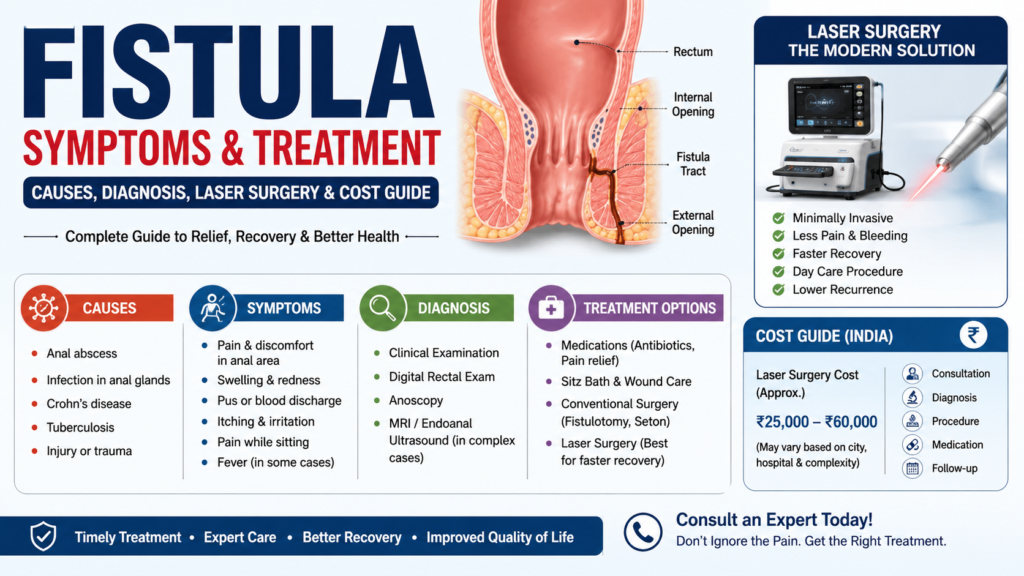
Anal fistula is a painful and often recurring condition that affects thousands of people every year. Many individuals ignore the early warning signs, assuming that the discomfort will go away on its own. However, timely diagnosis and proper treatment are essential to prevent complications and improve quality of life. Understanding Fistula Symptoms and Treatment can help patients seek medical attention at the right time and avoid long-term health issues.
This comprehensive guide covers everything you need to know about anal fistulas, including symptoms, causes, diagnosis, modern treatment options, recovery, and the Fistula Operation Cost in India.
What Is an Anal Fistula?
An anal fistula is an abnormal tunnel that forms between the inside of the anal canal and the skin surrounding the anus. It usually develops after an infection in one of the anal glands. When an abscess forms and does not heal properly, it may leave behind a passage that becomes a fistula.
Anal fistulas can cause significant discomfort and may lead to recurring infections if left untreated. Learning about Fistula Symptoms and Treatment is important because early intervention can reduce complications and improve treatment outcomes.
Common Fistula Symptoms
Recognizing the signs of a fistula is the first step toward getting appropriate care. The most common Fistula Symptoms and Treatment concerns begin with persistent discomfort in the anal area.
1. Pain Around the Anus
Pain is one of the most noticeable symptoms. The discomfort may worsen while sitting, walking, or during bowel movements.
2. Swelling and Redness
The skin around the anus may become swollen, tender, and inflamed due to ongoing infection.
3. Pus or Blood Discharge
A fistula often causes continuous or intermittent discharge of pus or blood from an opening near the anus.
4. Foul-Smelling Fluid
Patients may notice unpleasant-smelling drainage from the affected area.
5. Recurring Abscesses
Repeated anal abscesses are a common indicator of an underlying fistula.
6. Fever and Fatigue
In severe cases, infection may lead to fever, weakness, and general discomfort.
Understanding these warning signs is essential when discussing Fistula Symptoms and Treatment with a healthcare professional.
Causes of Anal Fistula
Several factors can contribute to the development of an anal fistula.
Anal Abscess
The most common cause is an untreated or poorly healed anal abscess.
Inflammatory Bowel Disease
Conditions such as Crohn’s disease can increase the risk of fistula formation.
Trauma
Injury or surgery in the anal region may occasionally lead to fistula development.
Tuberculosis and Infections
Certain infections can contribute to chronic inflammation and fistula formation.
Radiation Therapy
Patients receiving radiation treatment in the pelvic area may face a higher risk.
Knowing the causes helps patients better understand Fistula Symptoms and Treatment options available to them.
Risk Factors for Developing a Fistula
Some individuals are more prone to developing fistulas than others.
- Chronic constipation
- Poor anal hygiene
- Inflammatory bowel diseases
- Diabetes
- Previous anal surgeries
- Recurring infections
People with these risk factors should be particularly attentive to Fistula Symptoms and Treatment recommendations provided by medical experts.
Piles and Fistula Treatment: Understanding the Difference
Many people confuse hemorrhoids with fistulas because both conditions affect the anal region. However, they are entirely different disorders requiring different approaches.
What Are Piles?
Piles, also known as hemorrhoids, are swollen blood vessels in the rectum or anus.
What Is a Fistula?
A fistula is an abnormal tunnel connecting two body structures.
Symptoms of Piles
- Bleeding during bowel movements
- Itching
- Swelling
- Pain in severe cases
Symptoms of Fistula
- Persistent pus discharge
- Recurring infection
- Pain and swelling
- Formation of an external opening
Proper diagnosis is essential because Piles and Fistula Treatment methods vary significantly. While piles may be managed with lifestyle changes and medications, fistulas usually require surgical intervention.
Patients often search for Piles and Fistula Treatment options simultaneously because both conditions can coexist. Consulting a qualified specialist ensures accurate diagnosis and effective care.
Importance of Consulting a Fistula Specialist Doctor
A Fistula Specialist Doctor plays a critical role in diagnosing and treating this condition. Since fistulas can vary in complexity, expert evaluation is necessary.
Accurate Diagnosis
A Fistula Specialist Doctor can identify the exact location and severity of the fistula using advanced diagnostic techniques.
Personalized Treatment Plan
Every patient is unique. A specialist creates a customized treatment strategy based on symptoms and medical history.
Reduced Risk of Recurrence
Proper treatment by a Fistula Specialist Doctor lowers the chances of the fistula returning.
Access to Advanced Procedures
Experienced specialists often offer modern techniques, including Laser Treatment for Anal Fistula, which can improve recovery outcomes.
Choosing an experienced Fistula Specialist Doctor can make a significant difference in treatment success.
How Is a Fistula Diagnosed?
Diagnosis typically involves several steps.
Physical Examination
The doctor examines the anal area for openings, swelling, and drainage.
Medical History Review
Symptoms, previous abscesses, and underlying conditions are discussed.
Imaging Tests
Advanced imaging techniques may include:
- MRI scan
- Ultrasound
- CT scan
- Fistulography
These tests help determine the exact path of the fistula and guide treatment decisions.
Treatment Options for Anal Fistula
The choice of treatment depends on the complexity and location of the fistula.
Medications
While medications can help control infection and inflammation, they rarely cure the fistula itself.
Fistulotomy
This traditional surgical procedure involves opening the fistula tract to allow healing.
Seton Placement
A surgical thread is inserted to help drain infection and promote healing.
Advancement Flap Surgery
This technique covers the internal fistula opening with healthy tissue.
Laser Treatment for Anal Fistula
One of the most advanced and patient-friendly solutions available today is Laser Treatment for Anal Fistula.
Laser Treatment for Anal Fistula
Modern medical technology has transformed fistula care through Laser Treatment for Anal Fistula.
This minimally invasive procedure uses laser energy to close the fistula tract from within, reducing tissue damage and promoting faster healing.
Benefits of Laser Treatment for Anal Fistula
Minimally Invasive
Unlike traditional surgery, Laser Treatment for Anal Fistula requires minimal cutting.
Less Pain
Patients generally experience less postoperative discomfort.
Faster Recovery
Recovery time is often shorter compared to conventional procedures.
Reduced Bleeding
The laser seals blood vessels during treatment.
Lower Risk of Infection
The procedure minimizes exposure of tissues and reduces infection risk.
Better Patient Comfort
Many patients prefer Laser Treatment for Anal Fistula because it allows them to return to normal activities sooner.
Due to these advantages, Laser Treatment for Anal Fistula has become a preferred option for many patients and healthcare providers.
Fistula Operation Cost in India
One of the most common concerns among patients is the Fistula Operation Cost.
Several factors influence the overall Fistula Operation Cost, including:
- Type of procedure
- Hospital location
- Surgeon’s experience
- Diagnostic tests
- Hospital stay duration
Average Fistula Operation Cost
In India, the Fistula Operation Cost can vary significantly depending on the treatment method and healthcare facility.
Generally, patients may expect the Fistula Operation Cost to range from ₹30,000 to ₹1,50,000 or more, particularly for advanced laser procedures.
It is important to discuss the estimated Fistula Operation Cost with your healthcare provider before treatment.
Recovery After Fistula Surgery
Recovery varies depending on the procedure performed.
Follow Medical Instructions
Take prescribed medications and attend follow-up appointments.
Maintain Hygiene
Keeping the anal area clean helps prevent infection.
Eat a High-Fiber Diet
Fiber-rich foods support healthy bowel movements and reduce strain.
Stay Hydrated
Drinking sufficient water promotes digestive health.
Avoid Strenuous Activities
Heavy lifting and intense exercise should be avoided during the recovery period.
Following these recommendations can improve healing and support successful Fistula Symptoms and Treatment outcomes.
Preventing Anal Fistulas
Although not all fistulas can be prevented, certain lifestyle habits may reduce risk.
- Maintain good hygiene
- Treat infections promptly
- Manage chronic bowel conditions
- Eat a balanced diet
- Stay physically active
- Seek medical attention for recurring abscesses
Preventive care plays an important role in minimizing future complications.
When Should You See a Doctor?
Consult a healthcare professional if you experience:
- Persistent anal pain
- Recurrent abscesses
- Pus discharge
- Swelling around the anus
- Fever associated with anal discomfort
Early diagnosis allows timely intervention and better treatment outcomes.
Conclusion
Understanding Fistula Symptoms and Treatment is essential for recognizing the condition early and seeking appropriate care. Anal fistulas rarely heal on their own and often require medical or surgical intervention. Modern techniques such as Laser Treatment for Anal Fistula have significantly improved patient comfort, recovery time, and treatment success rates.
Patients should not ignore symptoms such as pain, swelling, or pus discharge. Consulting a qualified Fistula Specialist Doctor ensures accurate diagnosis and personalized treatment planning. Whether you’re exploring Piles and Fistula Treatment options or evaluating the Fistula Operation Cost, informed decisions can lead to better health outcomes and a faster return to daily life.
By understanding the causes, symptoms, treatment options, and preventive measures, patients can take proactive steps toward effective recovery and long-term well-being.