Types of Piles: Internal vs External Hemorrhoids

Constipation Treatment: Causes, Symptoms, Natural Remedies, and Prevention
June 16, 2026
Piles During Pregnancy: Causes and Safe Treatment Options
June 25, 2026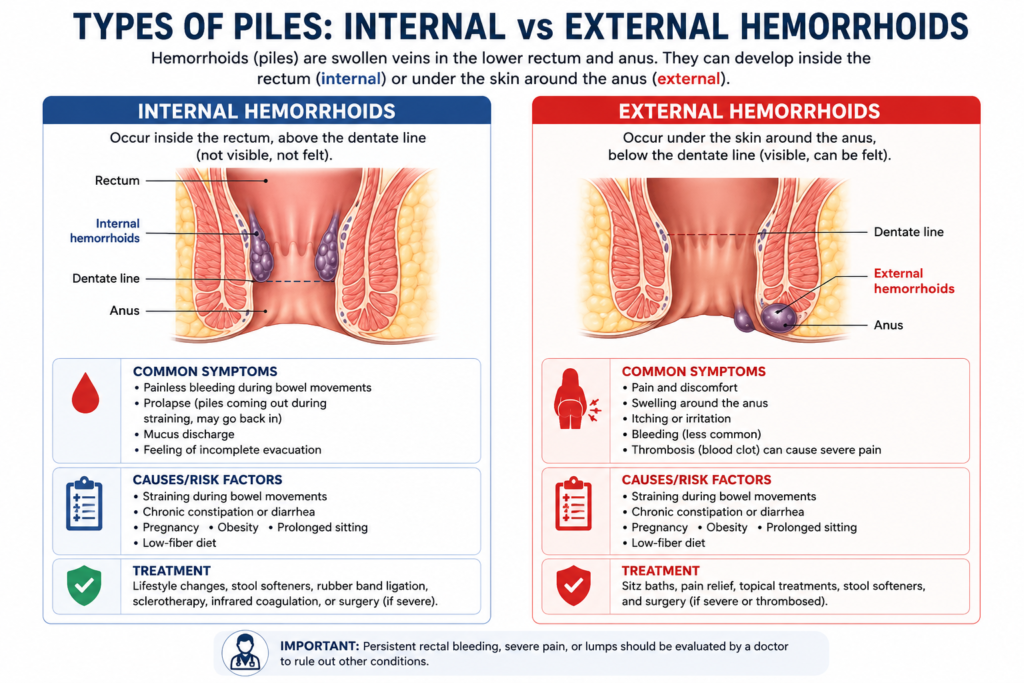
Piles, also known as hemorrhoids, are a common health condition that affects millions of people worldwide. Despite being a widespread problem, many individuals hesitate to discuss it due to embarrassment or lack of awareness. Understanding the Types of Piles is essential for recognizing symptoms early and seeking appropriate treatment. Hemorrhoids occur when the veins in the lower rectum or around the anus become swollen and inflamed. Depending on their location, they are classified as Internal Hemorrhoids or External Hemorrhoids.
Both forms can cause discomfort, pain, itching, and bleeding, but they differ in symptoms, severity, and treatment approaches. Learning about these differences can help patients make informed decisions about their health and improve their quality of life. Individuals experiencing persistent symptoms should seek timely medical advice, as specialized Piles (Hemorrhoids) Treatment in Faridabad can help diagnose the condition accurately and provide effective relief. This article explores the various Types of Piles, their causes, symptoms, diagnosis, treatment options, and preventive measures.
What Are Piles?
Piles are swollen veins located in the rectum or anus. They develop due to increased pressure in the lower rectal area, which can result from chronic constipation, prolonged sitting, obesity, pregnancy, or straining during bowel movements.
The two primary Types of Piles are:
- Internal hemorrhoids
- External hemorrhoids
While some people may experience mild symptoms that resolve on their own, others may require medical treatment. Understanding the different forms of hemorrhoids is the first step toward effective management and prevention.
Understanding Internal Hemorrhoids
Internal Hemorrhoids develop inside the rectum and are usually not visible from outside the body. Because there are fewer pain-sensitive nerves inside the rectum, internal hemorrhoids often cause little to no pain initially.
Symptoms of Internal Hemorrhoids
Common symptoms include:
- Painless rectal bleeding during bowel movements
- Bright red blood on toilet paper
- Mucus discharge
- Feeling of incomplete bowel evacuation
- Prolapse, where hemorrhoids protrude outside the anus
In many cases, people may not realize they have Internal Hemorrhoids until they notice bleeding. As the condition progresses, the hemorrhoids may enlarge and prolapse through the anal opening.
Grades of Internal Hemorrhoids
Doctors often classify Internal Hemorrhoids into four grades:
Grade I
Small hemorrhoids that remain inside the rectum and may bleed occasionally.
Grade II
Hemorrhoids that protrude during bowel movements but retract automatically.
Grade III
Hemorrhoids that protrude and require manual repositioning.
Grade IV
Severely prolapsed hemorrhoids that cannot be pushed back inside.
Causes of Internal Hemorrhoids
Several factors contribute to the development of Internal Hemorrhoids, including:
- Chronic constipation
- Frequent straining
- Low-fiber diet
- Obesity
- Pregnancy
- Heavy lifting
- Aging
Early diagnosis and proper Piles Symptoms and Treatment strategies can help prevent complications and improve patient comfort.
Understanding External Hemorrhoids
External Hemorrhoids develop under the skin around the anus. Unlike internal hemorrhoids, they occur in an area rich in pain-sensitive nerves, making them more uncomfortable and noticeable.
Symptoms of External Hemorrhoids
Common signs include:
- Pain or discomfort around the anus
- Swelling near the anal opening
- Itching and irritation
- Bleeding during bowel movements
- Tender lumps around the anus
Many patients seek medical attention because External Hemorrhoids can significantly interfere with daily activities such as sitting, walking, and exercising.
Thrombosed External Hemorrhoids
A thrombosed hemorrhoid occurs when a blood clot forms inside an external hemorrhoid. This condition can cause:
- Severe pain
- Hard lump near the anus
- Swelling
- Inflammation
Thrombosed External Hemorrhoids often require prompt medical evaluation and may need minor surgical intervention for relief.
Causes of External Hemorrhoids
Common causes include:
- Straining during bowel movements
- Chronic diarrhea
- Constipation
- Obesity
- Prolonged sitting
- Pregnancy
- Heavy lifting
Proper understanding of Piles Symptoms and Treatment helps individuals seek care before symptoms become severe.
Difference Between Internal and External Piles
Understanding the Difference Between Internal and External Piles is essential because each type presents differently and may require different treatment approaches.
Location
- Internal Hemorrhoids occur inside the rectum.
- External Hemorrhoids develop under the skin around the anus.
Pain Level
- Internal hemorrhoids are usually painless.
- External hemorrhoids often cause pain and discomfort.
Visibility
- Internal hemorrhoids are generally not visible.
- External hemorrhoids can often be seen or felt as lumps.
Bleeding
- Internal hemorrhoids commonly cause painless bleeding.
- External hemorrhoids may bleed if irritated or injured.
Complications
- Internal hemorrhoids may prolapse.
- External hemorrhoids may become thrombosed.
This Difference Between Internal and External Piles highlights why proper diagnosis is necessary before starting treatment. Another important Difference Between Internal and External Piles involves symptom severity, as external hemorrhoids tend to cause more noticeable discomfort. Understanding the Difference Between Internal and External Piles can also help patients communicate symptoms accurately to healthcare providers.
Causes and Risk Factors of Piles
Several lifestyle and medical factors increase the likelihood of developing the various Types of Piles.
Chronic Constipation
Repeated straining places pressure on rectal veins, increasing the risk of hemorrhoid formation.
Low-Fiber Diet
A diet lacking fruits, vegetables, and whole grains often leads to harder stools and difficult bowel movements.
Obesity
Excess body weight places additional pressure on the pelvic and rectal veins.
Pregnancy
Pregnant women frequently develop hemorrhoids due to increased abdominal pressure and hormonal changes.
Sedentary Lifestyle
Prolonged sitting, especially on the toilet, contributes to the development of hemorrhoids.
Aging
As people age, the tissues supporting rectal veins weaken, increasing susceptibility to hemorrhoids.
Understanding these risk factors helps individuals reduce their chances of developing different Types of Piles and improve overall digestive health.
Diagnosis of Hemorrhoids
Accurate diagnosis is important for effective Piles Symptoms and Treatment planning.
Medical History
Doctors begin by discussing symptoms, bowel habits, and family history.
Physical Examination
External hemorrhoids can often be identified through visual inspection.
Digital Rectal Examination
The physician may insert a gloved finger into the rectum to check for abnormalities.
Anoscopy
A small tube is used to examine the anal canal and identify Internal Hemorrhoids.
Colonoscopy
In some cases, especially when rectal bleeding occurs, a colonoscopy may be recommended to rule out other gastrointestinal conditions.
Early diagnosis helps ensure appropriate Piles Symptoms and Treatment before complications arise.
Treatment Options for Hemorrhoids
The best treatment depends on the severity and type of hemorrhoids.
Lifestyle Modifications
Many mild cases improve with:
- Increased fiber intake
- Adequate hydration
- Regular exercise
- Avoiding prolonged sitting
- Healthy bowel habits
These measures form the foundation of effective Piles Symptoms and Treatment.
Medications
Doctors may recommend:
- Topical creams
- Anti-inflammatory ointments
- Pain relievers
- Stool softeners
These treatments can reduce discomfort associated with both Internal Hemorrhoids and External Hemorrhoids.
Minimally Invasive Procedures
Rubber Band Ligation
A rubber band is placed around the hemorrhoid to cut off blood supply.
Sclerotherapy
A chemical solution shrinks the hemorrhoid tissue.
Infrared Coagulation
Heat is used to reduce hemorrhoid size.
These procedures are commonly used for persistent Internal Hemorrhoids.
Surgical Treatment
For severe or recurrent cases, surgery may be necessary.
Hemorrhoidectomy
Complete removal of hemorrhoids.
Stapled Hemorrhoidopexy
A procedure that repositions prolapsed hemorrhoids and reduces blood flow.
Advanced surgical procedures offer effective Piles Symptoms and Treatment when conservative methods fail.
Prevention Tips for Hemorrhoids
Preventing hemorrhoids is often easier than treating them.
Eat a High-Fiber Diet
Consume:
- Fruits
- Vegetables
- Whole grains
- Legumes
Fiber softens stool and reduces straining.
Drink Plenty of Water
Hydration helps maintain regular bowel movements.
Exercise Regularly
Physical activity improves digestion and reduces pressure on rectal veins.
Avoid Straining
Do not force bowel movements or spend excessive time on the toilet.
Maintain a Healthy Weight
Weight management reduces pelvic pressure and lowers the risk of developing different Types of Piles.
Respond to Nature’s Call Promptly
Delaying bowel movements can make stools harder and increase the risk of hemorrhoids.
Following these preventive measures can significantly reduce the likelihood of developing hemorrhoids and improve digestive health.
When to See a Doctor
While mild hemorrhoids often improve with home care, medical attention should be sought if you experience:
- Persistent rectal bleeding
- Severe pain
- Large protruding hemorrhoids
- Recurrent symptoms
- Significant discomfort affecting daily life
Prompt evaluation helps identify the Difference Between Internal and External Piles and ensures appropriate treatment.
Conclusion
Understanding the various Types of Piles is crucial for recognizing symptoms and seeking timely treatment. Both Internal Hemorrhoids and External Hemorrhoids can affect daily comfort and quality of life, but early intervention often leads to successful outcomes. Patients experiencing anorectal conditions should consult experienced specialists, as services such as Pilonidal Sinus Treatment in Faridabad and hemorrhoid management can provide accurate diagnosis and effective treatment options. Knowing the Difference Between Internal and External Piles helps patients better understand their condition and choose the most appropriate care.
Modern medical advances provide numerous options for Piles Symptoms and Treatment, ranging from lifestyle modifications and medications to minimally invasive procedures and surgery. By maintaining healthy bowel habits, eating a fiber-rich diet, staying hydrated, and exercising regularly, individuals can significantly reduce their risk of developing hemorrhoids and enjoy better long-term digestive health.